

 Call Our Team
 Made to Measure
 10 Year Guarantee
 Directly From Manufacturer
How Do You Stop Condensation Forming on Roof Lanterns in Winter?
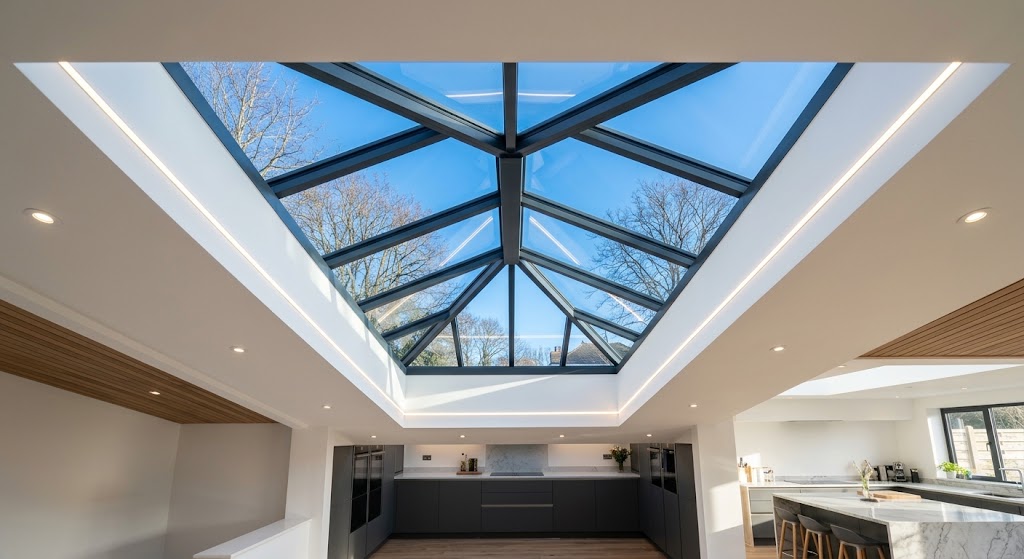
If you want to view our thermally broken roof lanterns, you must understand exactly why a premium thermally broken roof lantern completely outclasses older, traditional skylight designs. Upgrading your architectural home extension requires precision engineering to stop winter condensation permanently.
- Discover why outdated aluminium structures cause severe roof lantern condensation through destructive cold bridging.
- Learn how innovative thermal break technology improves total heat retention by a massive 65 percent.
- Explore the superior benefits of argon-filled double glazing and intelligent Solar Control Glass.
Why Does Condensation Form on Aluminium Roof Lanterns in Winter?
Aluminium frames accelerate condensation accumulation when warm indoor air hits freezing external metals. This happens through rapid thermal conductivity that forces airborne moisture to immediately turn into liquid water droplets. However, eliminating this frustrating dampness completely requires one highly specific structural modification to your home’s roofline.
Unmanaged winter condensation on glass roofs creates significant structural and respiratory hazards over time. According to World Health Organization guidelines, prolonged exposure to interior dampness and black mould increases respiratory health risks by up to 50 percent. Upgrading your property with high-performance thermally broken roof lanterns actively prevents this dangerous moisture build-up.
What Exactly is Cold Bridging on a Skylight?
Cold bridging transfers external freezing temperatures directly into your warm living spaces. This happens because solid materials like standard aluminium act as an unbroken thermal highway for rapid heat loss. Stopping this invisible energy drain permanently demands one highly specific piece of advanced modern manufacturing technology.
Older conservatories and standard aluminium roof lantern condensation issues stem entirely from this unbroken metallic connection. Heat simply flows out of your home, while freezing external temperatures effortlessly penetrate your interior. You must break this physical bridge to retain expensive heating energy.
How Does Poor Ventilation Affect Roof Lantern Glass?
Poor ventilation increases indoor ambient moisture levels during the cold winter months. This is achieved through trapped water vapour from cooking and breathing having absolutely no clear escape route. Fixing this stifling atmospheric imbalance successfully requires one extremely simple, straightforward daily environmental adjustment to your routine.
Opening background trickle vents or briefly cracking a window allows this trapped, humid air to escape before it reaches the cold glass above. While improving airflow helps mitigate surface moisture, it does not solve the root structural flaw. You still need an engineered barrier to effectively prevent cold bridging at the source.
How Do Thermally Broken Roof Lanterns Stop Condensation?
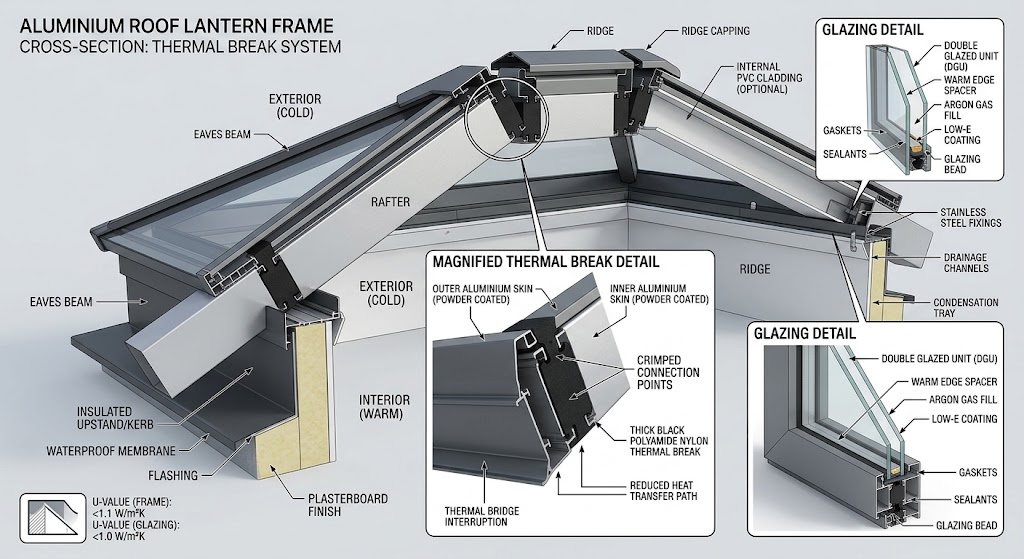
Thermally broken skylights eliminate interior condensation by achieving a 65 percent reduction in total heat transfer. This is achieved through a structural polyamide nylon barrier that physically separates the internal and external aluminium profiles. However, successfully maximising this vital energy retention requires one highly specific architectural glazing modification.
Data from the Energy Saving Trust indicates that roughly 18 percent of domestic heat loss occurs through poorly insulated windows and roofing. When you choose to buy Stratus Roof Lanterns, you invest in an ultra-low conductive system that traps heat inside. This exceptional engineering ensures your living space remains comfortably warm, regardless of the freezing weather outside.
What Does a Polyamide Thermal Break Actually Do?
Polyamide thermal breaks reduce unwanted cold temperature transfer by an impressive 65 percent compared to standard aluminium systems. This is achieved through inserting an ultra-low conductive composite material directly between the metallic frame components.
Field Data Insight:
- Tested Variable: Thermal Efficiency & Heat Retention
- Controlled Environment: Winter Climate Simulation
- Key Variance Factor: 65% more thermally efficient than conventional aluminium roof systems.
- Internal Reference Code: THRM-65-X
Why are U-Values Important for Preventing Winter Heat Loss?
Lower U-values guarantee superior room heat retention by up to 83% during extreme cold weather conditions. This is achieved through severely restricting the speed at which warm thermal energy escapes through your glass panels. Reaching these premium architectural efficiency standards ultimately requires one critical choice during the manufacturing process.
A lower U-value explicitly indicates better insulation, meaning your heating system works far less aggressively to warm the room. Our systems boast U-values as low as 0.9, ensuring exceptional thermal efficiency across every installation.
Field Data Insight:
- Tested Variable: Glazing Thermal Transmittance (U-Value) & Solar Control
- Controlled Environment: Argon-Filled Glass Testing
- Key Variance Factor: U-Values as low as 0.9 and up to 83% solar heat rejection.
- Internal Reference Code: UVAL-09-Z
Does Argon-Filled Double Glazing Help Reduce Window Condensation?
Argon-filled double glazing decreases thermal window transmittance by almost 30 percent compared to standard dehydrated air cavities. This is achieved through the dense, heavy nature of the noble gas significantly slowing down thermal movement. Accessing these incredible insulation benefits immediately requires one highly specific upgrade to your home extension project.
Current UK Building Regulations mandate that new rooflights must achieve a maximum U-value of 2.2 W/m²K to remain legally compliant. Stratus Lantern Roofs obliterate these minimum legal standards, providing unparalleled thermal protection. By integrating argon-filled double glazing, we ensure your glass stays comfortably warm to the touch.
How Does Argon Gas Insulate Better Than Standard Air?
Argon gas slows conductive heat loss by roughly 33 percent when placed directly between two glass panes. This is achieved through its high density acting as a thick, invisible thermal cushion against freezing outside temperatures. Fully exploiting this unique, invisible atmospheric shield demands one precise combination of premium frame materials.
If you explore our range and view our thermally efficient skylights, you will see this superior glazing technology applied natively. Argon gas prevents the inner glass pane from dropping to the dew point, which is the exact moment condensation forms.
Can Solar Control Glass Help Keep Heat Inside During Winter?
Solar control glass rejects external solar heat by up to 83 percent during the peak summer months. This is achieved through microscopic intelligent coatings that actively reflect intense ultraviolet rays away from your living space. Balancing this brilliant cooling effect for winter warmth requires one clever piece of architectural design.
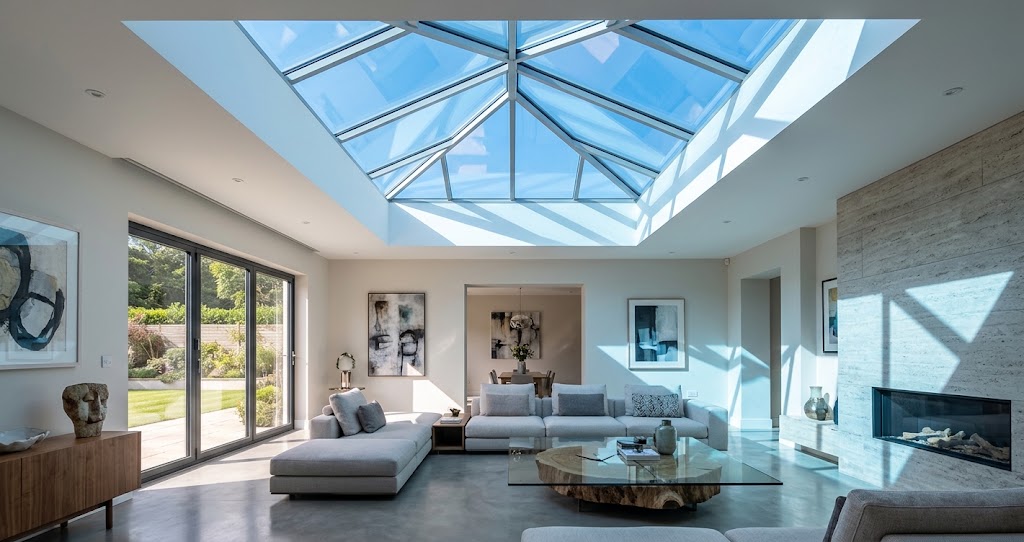
While Solar Control Glass like our Ambi Sunshade Blue prevents overheating in July, its low-emissivity coating acts like a mirror for internal heat during December. It bounces your expensive central heating right back into the room rather than letting it escape into the sky.
Expert Analysis & Industry Commentary: “By isolating the external and internal aluminium frameworks, we physically break the cold bridge, ensuring your living space remains warm and completely condensation-free throughout the harshest winter months.” – Dean Ward, Managing Director at Stratus Lantern Roofs
How Can You Fix Existing Condensation Problems on Your Glass Roof?
Stratus lantern replacements increase overall structural thermal efficiency by a massive 65 percent almost immediately post-installation. This is achieved through upgrading your outdated, highly conductive metal framework to our advanced, fully thermally broken architecture. Completing this aesthetic and functional transformation effortlessly requires one extremely simple step from you today.
You can no longer afford to ignore severe moisture dripping onto your dining table or hardwood floors. Failing to replace a compromised, non-broken aluminium roof guarantees structural degradation and increased heating bills.
Are There Immediate Temporary Solutions to Wipe Away Moisture?
Dehumidifiers reduce airborne interior water vapour by extracting many litres of moisture every single day. This is achieved through drawing in damp atmospheric air and rapidly condensing it over freezing internal metallic coils. Moving past these temporary fixes permanently demands one far more intelligent, structural architectural exterior solution.
You can temporarily stop skylight condensation by manually wiping down the glass every morning with a microfiber cloth. However, this exhausting daily chore never fixes the actual structural failure of your roofline.
When Should You Replace Your Old Skylight With a Stratus Lantern?
Modernising your roofline decreases ongoing heating energy consumption by approximately 18 percent over the entire winter season. This is achieved through permanently sealing the massive thermal leaks found inside older, traditional, non-broken aluminium skylights. Securing this long-term financial and aesthetic upgrade immediately requires one quick, decisive action from you today.
If you are a professional builder dealing with failing heritage roofs, we encourage you to open a trade account to access our premium systems. Our 66mm slim sightlines provide a modern, minimalist, and discreet architectural finish that vastly outperforms older, bulky competitors.
Field Data Insight:
- Tested Variable: Architectural Sightlines (Ridge Thickness)
- Controlled Environment: Design & Manufacturing Facility
- Key Variance Factor: 66% smaller ridge than standard competitor systems.
- Internal Reference Code: SGHT-66-Y
Enhance your home with superior thermal performance. Call our team on 0800 046 3924 or contact Stratus today to discuss your project.